Where the whole programme stands.
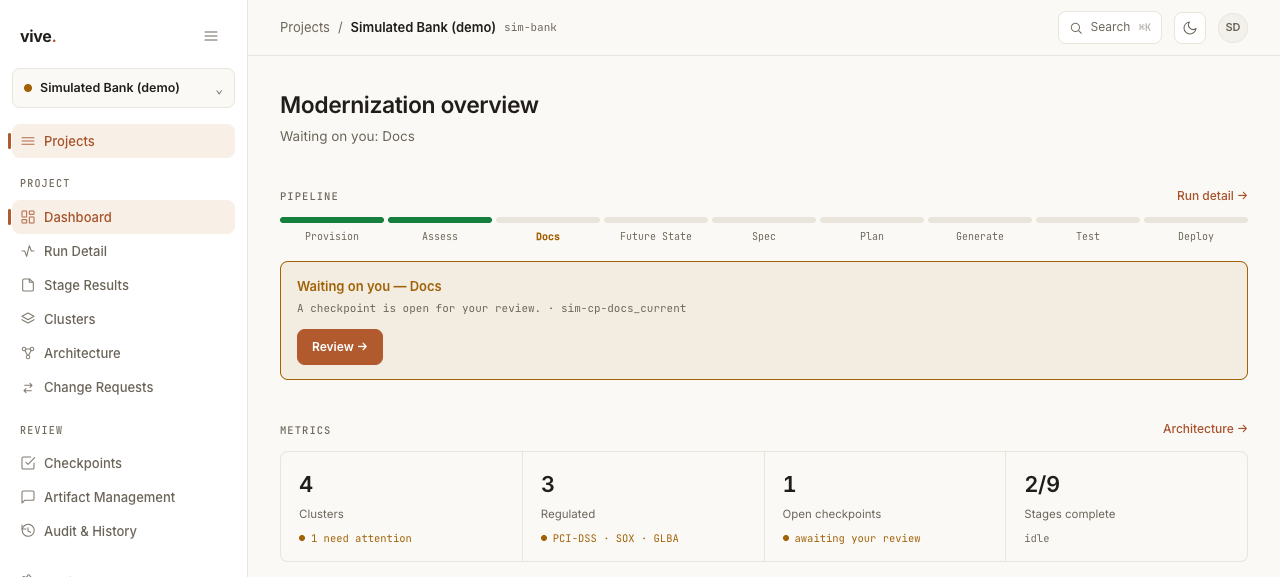
Every project opens on a modernization overview: the nine-stage pipeline with its current position, the subsystems the analyzer found, how many of them are regulated, and what is waiting on a human.
Product · Modernization
Vive assesses a legacy codebase, documents what it actually does, plans the migration, generates the new system, and proves it with tests. A fleet of specialized agents runs the pipeline; a person approves every stage before it advances.
One pipeline, from archaeology to production
About these screens. The screenshots below are taken from the Vive interface running against a sample project built for demonstration. They show the real product; the codebase being modernized is illustrative, not a customer deployment.
Every project opens on a modernization overview: the nine-stage pipeline with its current position, the subsystems the analyzer found, how many of them are regulated, and what is waiting on a human.
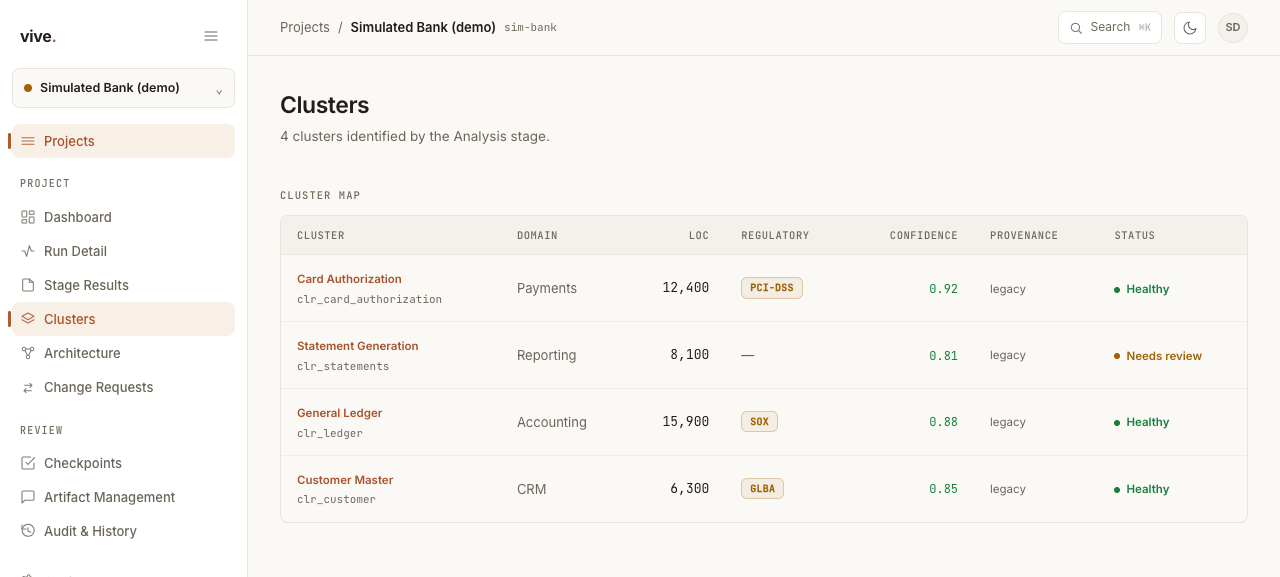
The analyzer reads the repository and clusters it into coherent subsystems — each with a domain, a size, the regulations that touch it, a confidence score, and the provenance of how it was decided.
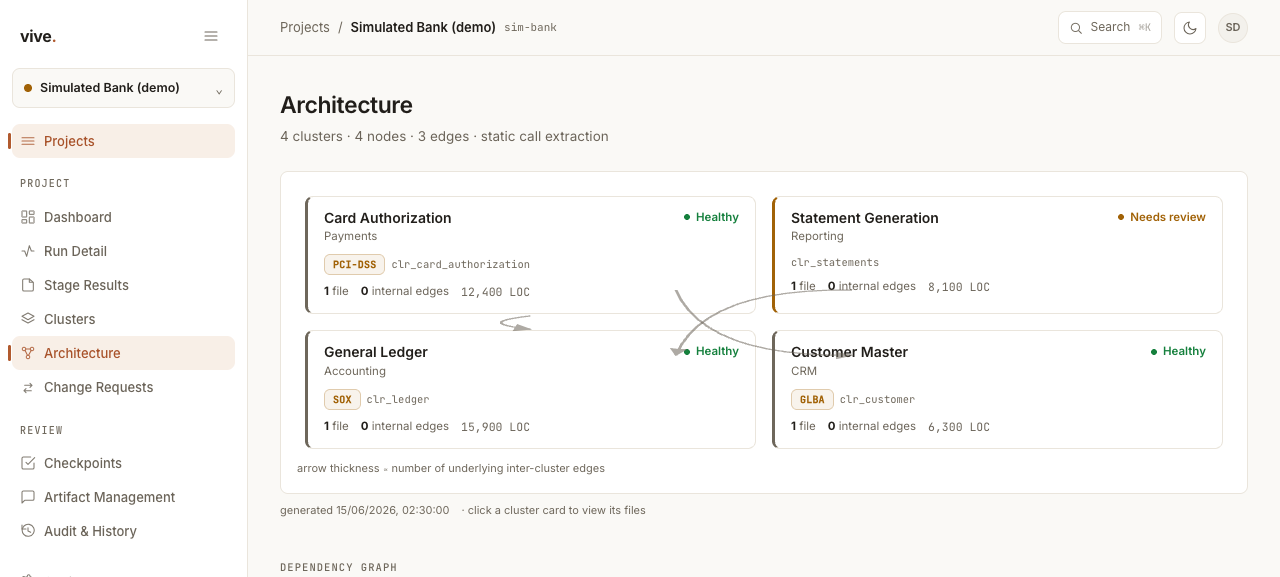
Dependencies are extracted from the code itself rather than from documentation nobody has updated. Arrow thickness tracks the number of underlying inter-cluster edges.
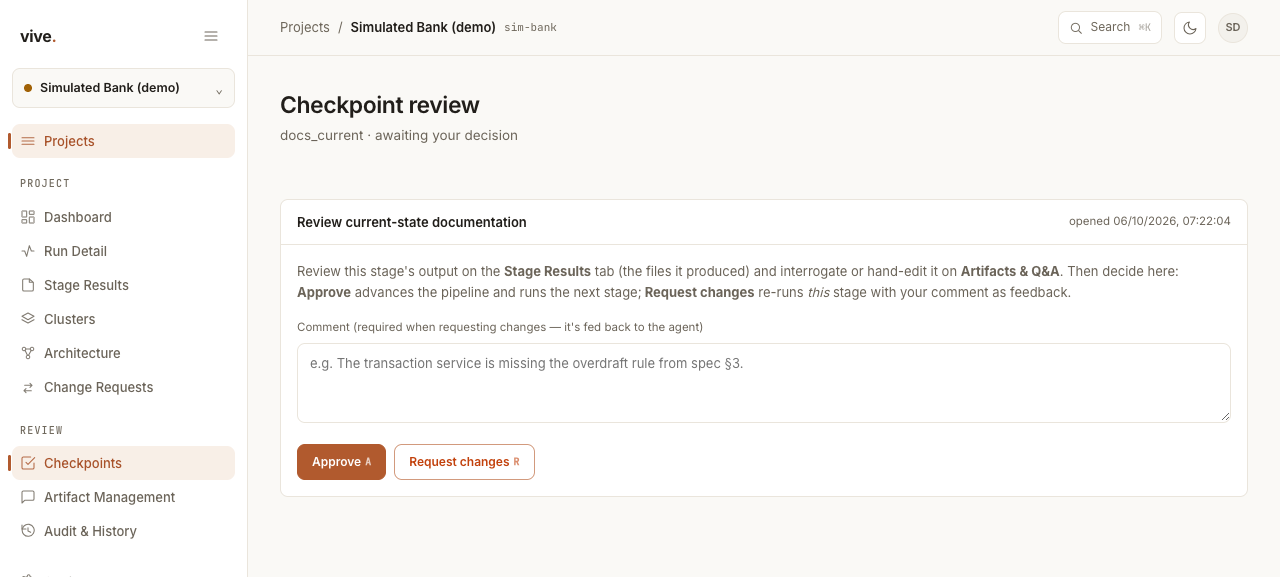
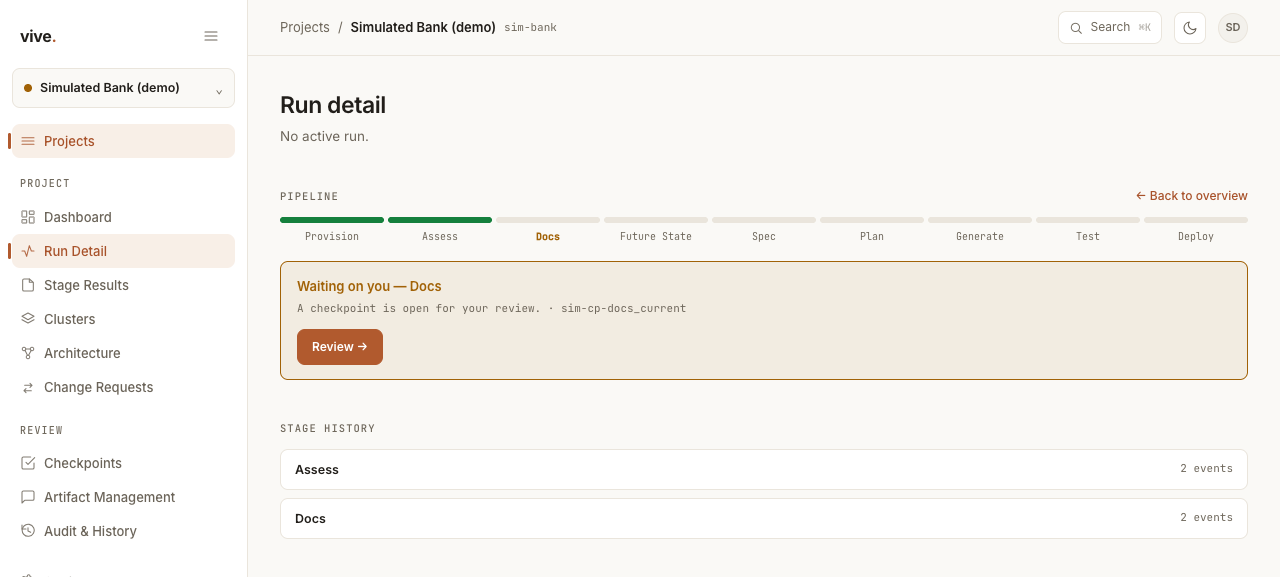
Gated stages stop and wait. Approving advances the pipeline and starts the next stage; requesting changes re-runs the same stage with your comment fed back to the agent as instruction. Nothing moves forward unreviewed.
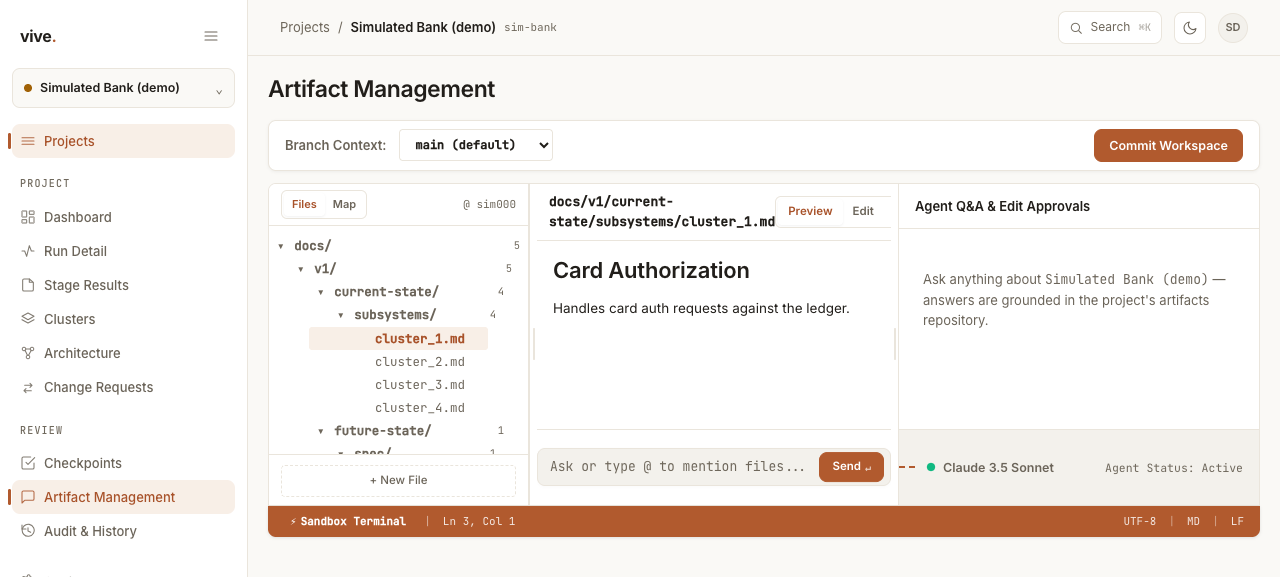
The documents the agents produce are not a black box. Browse the generated tree, read or hand-edit any file, and interrogate the whole corpus — answers are grounded in the project's own artifacts rather than in general knowledge.
Each run reports where it is, what it is waiting on, and what happened at every stage before it — so a modernization that takes weeks stays legible the whole way through.
Vive is in development. If you have a legacy estate you would like to put through it, we would like to hear about it.